
Rajasthan (73 per cent), Himachal Pradesh (67) and Delhi (60) saw the highest share of districts reporting excess to large excess rainfall.

Largecap equity funds remain suitable for conservative and moderate risk-taking investors seeking relatively stable returns.

Israel has for more than two decades and several US presidencies worked to draw the United States into a full-scale war with Iran. Having finally achieved that, the last thing it wants is Trump declaring victory and going home, as he is prone to do. Ali Larijani was the figure most capable of handing Trump a negotiated exit with something to show for it. Without Larijani, the road to an exit gets considerably narrower. Prem Panicker continues his must read daily blog on the Gulf War.

Analysts predict India will face oil price volatility and macroeconomic effects due to the escalating Iran crisis, though the country's oil supply chain is not yet structurally insecure.

Deloitte India on Thursday projected India's economy to grow 6.7-6.9 per cent in the current fiscal amid buoyant demand and policy reforms. Indian economy grew 7.8 per cent in the April-June quarter of current fiscal.

Indian consumers are entering the festive season with renewed confidence and financial optimism, outpacing global benchmarks, according to Deloitte India's latest Consumer Signals: India Chapter. "With inflationary pressures easing and the recent Goods and Services Tax (GST) revisions enhancing purchasing power and festive cheer among consumers, this brings a new wave of consumption.
The core dilemma remains: Why provide further stimulus to an economy that is already booming at an 8 per cent growth rate? asks Rajeswari Sengupta.

'Economic activity appears to have peaked in the second quarter of FY26, with industrial output, exports, and business confidence all softening from October 2025.'

Finance Minister Nirmala Sitharaman on Friday said the world is facing "profound imbalances" in trade and energy security, and is undergoing a structural transformation, with India standing out as a 'stabilising force' that can withstand external shocks.
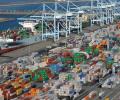
'The immediate impact for India will be very minimal as the share of Venezuela in our total overseas production is very low.'
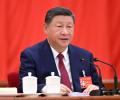
If Xi Jinping is dethroned in the future, the instrument for that may well be embedded within the PLA, notes former foreign secretary Shyam Saran.

Amid US-China trade tensions and economic vulnerabilities, India must seize the 'China +1' opportunity, deepen reforms, secure FTAs, and globalise its firms for long-term growth, suggests Ajay Shah.
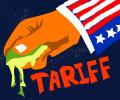
'If the near-term economic pain is absorbed more by those who have the ability and the financial strength to do so, then small and medium enterprises in downstream industries will emerge stronger from the trade imbroglio.'

India's manufacturing sector growth fell to a three-month low in May, restricted by inflationary pressures, softer demand and heightened geopolitical conditions, a monthly survey said on Monday. The seasonally adjusted HSBC India Manufacturing Purchasing Managers' Index (PMI) fell from 58.2 in April to 57.6 in May, highlighting the weakest improvement in operating conditions since February.

The consolidated net profit of Marico, the maker of Parachute coconut oil, declined 0.7 per cent in the second quarter (July-September) of 2025-26 (Q2FY26).

The Indian services sector growth touched an 11 month high in July, supported by a pickup in new exports orders and sharp rise in overall sales, a monthly survey said on Tuesday. The seasonally adjusted HSBC India Services PMI Business Activity Index was at 60.5 in July, little-changed from 60.4 in June, and the rate of expansion was the best seen since August 2024.
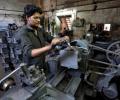
India's manufacturing sector growth recovered from September's eight-month low to 57.5 in October fuelled by faster increases in total new orders and international sales, a monthly survey said on Monday. The seasonally adjusted HSBC India Manufacturing Purchasing Managers' Index (PMI) rose from September's eight-month low of 56.5 to 57.5 in October, indicating a substantial and accelerated improvement in operating conditions.

Hit by inflation, higher input costs and pricing measures, fast-moving consumer goods companies are expected to see a contraction in their gross margin and a modest-to-flat operating profit in the October-December quarter. Several FMCG makers are likely to log a low single-digit rise in their revenue, returning to the cycle of value-driven growth.

German luxury carmaker Mercedes-Benz on Friday said it will hike prices of its vehicles in India by up to 3 per cent on its entire model range in the portfolio from January 1, 2025, citing a rise in input costs, inflationary pressures and higher operational expenses. Prices of Mercedes-Benz cars in India will be revised by Rs 2 lakh for the GLC to Rs 9 lakh for the top-end Mercedes-Maybach S 680 luxury limousine, Mercedes-Benz India said in a statement.

From the Sensex pack, HDFC Bank, Maruti, Tech Mahindra, HCL Tech, ITC, ICICI Bank, Kotak Mahindra Bank and Bajaj Finance were among the biggest laggards. NTPC, Adani Ports, Mahindra & Mahindra, Tata Steel and IndusInd Bank were among the gainers.

Indian OMCs have not been buying Iranian or Venezuelan crude which is actually sanctioned by US. OMCs have always complied with the price cap of $60 for Russian oil recommended by the US.

The automobile industry has sought government support in expediting approvals from the Chinese government for importing rare earth magnets used in various applications, including passenger cars. As per the industry sources, various domestic suppliers have already sought approval from the Chinese government through their local vendors in China.

'People are taking effort to train and adapt to current skills.' 'If that is not there, they are not useful to us.' 'They have to adapt to new technology, and what is important is learnability.'
Marico is expected to post high single-digit volume growth in the India business in the July-September quarter. However, it is expected to moderate sequentially, the company said in its quarterly update on exchanges.

From the Sensex firms, Tech Mahindra, Tata Steel, Tata Motors, Titan, HDFC Bank, IndusInd Bank, Infosys and Kotak Mahindra Bank were among the biggest laggards. On the other hand, Adani Ports, Mahindra & Mahindra, Power Grid, Eternal and Hindustan Unilever were among the gainers.

S&P Global Ratings on Tuesday said the Indian economy is set for "resilient growth" in 2025 and projected inflation pressure to recede which will lead to "modest" easing of the monetary policy by the RBI. In its India outlook for 2025, S&P also retained India's growth forecast for current fiscal at 6.8 per cent, followed by 6.9 per cent growth in 2025-26.

The primary drivers: Geopolitical disruptions inflating fuel and operational costs, and a surge in travel demand.

India's services sector activity eased slightly in March, weighed down by a marginal slowdown in sales amid softer demand conditions and easing inflationary pressures, a monthly survey said on Friday. The seasonally adjusted HSBC India Services PMI Business Activity Index fell from February's reading of 59.0 to 58.5 in March, but remained above its long-run average of 54.2.

Brokerages expect a further slowdown in Indian firms' revenue and earnings growth in Q4FY25, following low single-digit growth in the preceding three quarters, as factors like weak consumer demand and credit growth linger on.

Sun Pharma, Tata Steel, State Bank of India, Axis Bank, Tata Motors, Larsen & Toubro and ICICI Bank were also among the Sensex gainers. HCL Tech, UltraTech Cement, Nestle and Hindustan Unilever were among the laggards.

Dabur's pre-quarterly update for Q3FY25 disappointed the market with the share dropping by 3.9 per cent. Growth was slower than expected and inflation hit margins. The management said that the fast-moving consumer goods (FMCG) consumption in rural markets was resilient and continued to grow faster than in urban markets.

'The RBI's MPC will maintain the current policy rates (6.50%) at the policy meeting, given ongoing inflationary pressures.'

Prices of various car models -- ranging from entry-level hatchbacks to high-end luxury offerings -- are set to rise as automakers have announced price hikes with effect from January. Carmakers cite an increase in input costs and operational expenses as the main reason to implement price increases from the next month. Industry experts, however, note that the exercise is also undertaken by automakers every year in December to shore up sales volume in the last month of the year, as customers postpone buyouts to later months to get the new year manufactured units.

Investors will take cues from the December quarter corporate earnings, with blue-chips like Infosys, Reliance Industries scheduled to report their results this week, in addition, inflation data and trading activity of foreign investors will also be crucial in dictating market trends, analysts said.

Homegrown fast-moving consumer goods (FMCG) major Dabur India is set to record low single-digit growth in consolidated revenue in the December quarter, it said in an update on Friday. The maker of Hajmola candy and Real fruit juice said rural consumption continued to be resilient and grow faster than urban in the third quarter.

There are multiple near-term worries for the stock of India's largest listed consumer company, Hindustan Unilever (HUL). While inflationary pressures will weigh on its profitability, demand pressures - especially in the rural market - are expected to hit the firm's revenues. This is why brokerages have cut the earnings estimates for financial year 2022-23 (FY23) by 7-10 per cent.

The prospect of protracted uncertainties in the global economic landscape not only pose a risk for India's growth outlook in 2025-26, but are also likely to dent the private sector's capital raising and investment plans, the finance ministry averred on Tuesday, cautioning the country's corporates that the era of 'easy pickings' was over.

Gold prices advanced Rs 700 to reach a new lifetime high of Rs 91,950 per 10 grams in the national capital on Wednesday on the back of continued buying by jewellers ahead of wedding season, according to the All India Sarafa Association. Besides, increased tensions in the Middle East and concerns about the US economic slowdown have kept the demand for safe-haven assets intact.

Inflows into equity mutual fund (MF) schemes declined for the third month in a row in March even though the equity market recovered sharply. Equity MF schemes raked in a net Rs 25,082 crore in March, down 14 per cent from February.

The last time this happened was in 1996.
